Principles for participation in competing demands for land use

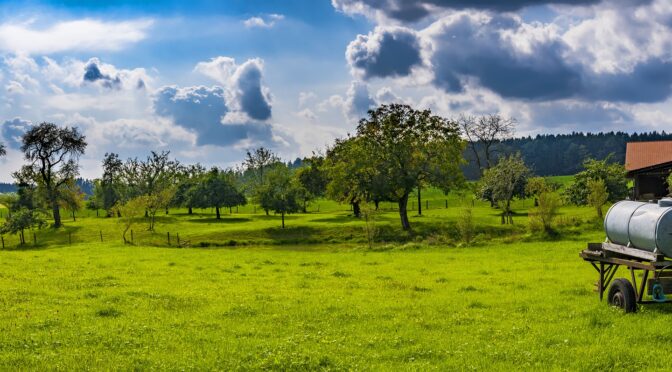
Global demand for agricultural products is competing with scarce land resources and environmental protection especially biodiversity protection and the increasing thread of shortages of water and nutrients. How can we ensure biodiversity and ecosystem protection in fragile habitats if we struggle to satisfy the demand of the world population for food, energy and housing?

Ten principles for a landscape approach to reconciling agriculture, conservation, and other competing land uses (Sayer et al., 2013) can help to guide the process of decision-making in the landscape context. These principles emphasize that we will need a people-centred approach applied at landscape scales and a focus on multifunctional landscapes. The principles in short:

Continue reading Principles for participation in competing demands for land use

Open places: Research with biological material from abroad – International regulations and due diligence in research

The course will be held online. Registration (closes soon): https://ethz.ch/services/en/service/courses-continuing-education.html—> Choose Plant Sciences to view and register for all currently offered PSC courses.

5 & 6 November 2020

Do you work with biological material from abroad? Do you know, how to correctly proceed with access and benefit sharing, material transferagreements and other procedures?

Continue reading Open places: Research with biological material from abroad – International regulations and due diligence in research

Maintaining Plant Biodiversity in Cities

Using Urban Design for a Better Green Infrastructure in Zurich

By Kevin Vega

What evidence was useful for policymaking?

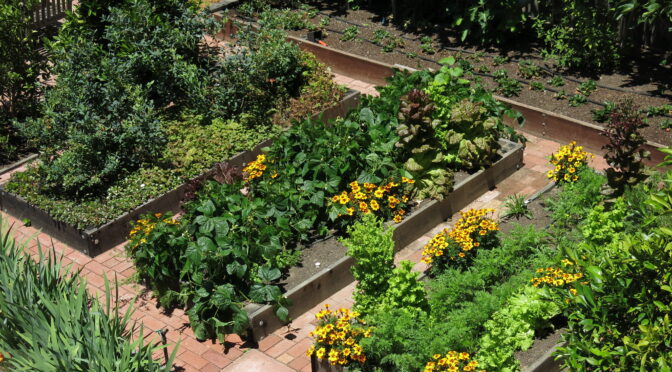
Understanding the effects of urban design on plant species composition in cities is essential to maintaining biodiversity overall, promoting urban resilience in the face of climate change, and improving life quality for a city’s residents. Functional ecosystems can benefit pollinators, reduce urban flooding, and improve air quality –all while looking aesthetically pleasing.

Continue reading Maintaining Plant Biodiversity in Cities

CALL 3 FOR PHD APPLICATIONS – DEADLINE Dec 1, 2020

Call 3 for PhD applications within the RESPONSE Doctoral Programme «to society and policy needs through plant, food and energy sciences»

RESPONSE DP is offering 8 early-stage researcher’s positions for 36 months (100%) at the interface of science and policy, as well as science and innovation at one of the three world-leading academic host organization – ETH Zurich and University of Zurich.

RESPONSE DP will train ESRs to reflect on their role as scientists in society, contributing with evidence to policymaking and to build capacities to address global challenges in the areas of sustainable food systems, sustainable energy systems and sustainable land use decisions.

For more information about RESPONSE, open positions and further steps (i.e. submit your application), have a look at:https://www.plantsciences.uzh.ch/en/research/fellowships/response.html

ETH Zurich and University of Zurich are dedicated to promoting the role of women in science, and, therefore, explicitly invites women to apply.

Pflanzenzüchtung – von klassischer Kreuzung bis Genom-Editierung

Mitglieder des PSC haben ein Faktenblatt zusammen mit dem Forum Genforschung Schweiz publiziert, welches die Methoden einer interessierten Öffentlichkeit verständlich machen will:

Ein neues Faktenblatt der Akademien der Wissenschaften Schweiz gewährt Ihnen einen Überblick über vier verschiedene Verfahren in der Pflanzenzüchtung und legt dabei einen Schwerpunkt auf die Anwendung der Genom-Editierung. Das Faktenblatt wurde von einer Gruppe von Experten und Expertinnen unter der Leitung des Forums Genforschung verfasst und geprüft.

Das Faktenblatt ist in Deutsch und Französisch unter folgendem Link erhältlich: http://geneticresearch.scnat.ch/fs-plantbreeding 

U Grossniklaus, M Messmer, R Peter, J Romeis und B Studer (2020) Pflanzenzüchtung – von klassischer Kreuzung bis Genom-Editierung. Swiss Academies Factsheet 15 (3): 10.5281/zenodo.3696456

Following up the summer school 2018: PSC published proceedings

Zurich-Basel Plant Science Center: Proceedings of the PlantHUB Summer School 2018, Responsible Research and Innovation (RRI) in Plant Sciences.

Melanie Paschke (ed.). With contributions by: Manuela Dahinden, Gregory Grin, Melanie Paschke, Christine Rösch, Daan Schuurbiers, Foteini Zampati, Camilo Chiang, Franco Conci, Claudio Cropano, Florian Cueni, Seydina Issa Diop, Daniel Grogg, Manuel Nolte, Ina Schlathölter, Giacomo Potente and Maximilian Vogt.

DOWNLOAD

The laboratory is in many ways still a protected space, in which (especially young) researchers are effectively shielded from outside pressures by their lab directors (Rip, 2003). The challenge for educational programs that aim to raise the level of attention to RRI issues is, therefore, to demonstrate the added value of social and ethical reflection for the researcher’s own work.

Continue reading Following up the summer school 2018: PSC published proceedings

PSC Proceedings: Responsible Research and Innovation (RRI)

Following up the summer school 2018 the PSC published proceedings:

Zurich-Basel Plant Science Center: Proceedings of the PlantHUB Summer School 2018, Responsible Research and Innovation (RRI) in Plant Sciences.

Melanie Paschke (ed.). With contributions by: Manuela Dahinden, Gregory Grin, Melanie Paschke, Christine Rösch, Daan Schuurbiers, Foteini Zampati, Camilo Chiang, Franco Conci, Claudio Cropano, Florian Cueni, Seydina Issa Diop, Daniel Grogg, Manuel Nolte, Ina Schlathölter, Giacomo Potente and Maximilian Vogt.

DOWNLOAD

Social transformation through innovation and research is a key element in the discussion as to how the global community can overcome its complex problems related to environmental and economic constraints in a resource-limited world. Innovation conflicts arise when transformation is mainly technology-driven and does not take up ethical, legal and social issues. In response, scientists are today being asked to play a role in the science-in society dialogue.

The laboratory is in many ways still a protected space, in which (especially young) researchers are effectively shielded from outside pressures by their lab directors (Rip, 2003). The challenge for educational programs that aim to raise the level of attention to RRI issues is, therefore, to demonstrate the added value of social and ethical reflection for the researcher’s own work.

Continue reading PSC Proceedings: Responsible Research and Innovation (RRI)

How can biodiversity-ecosystem function research (BEF) be used to inform ecosystem managers and policy-makers?

Ecosystem researchers currently do different types of BEF research. How can these studies be used in policymaking? A recent analysis with involvement of Prof. Nina Buchmann from ETH Zurich and member of PSC came up with recommendations:

Continue reading How can biodiversity-ecosystem function research (BEF) be used to inform ecosystem managers and policy-makers?

How can policymakers decide if protected areas (=PA) in the Alps will be able to secure high-species richness under climate future change?

Protected areas like the Swiss National Park should conserve native plant and animal species in the Alps now and in the future. With upcoming climate change the habitats of species shift and the spatial distribution of alpine biodiversity is changing.

Can researchers predict if protected areas can uphold conservation goals under these changing conditions? How can policymakers decide if they need to update the boundaries of existing protected areas or if new ones need to be created in specific areas to conserve alpine biodiversity?

Continue reading How can policymakers decide if protected areas (=PA) in the Alps will be able to secure high-species richness under climate future change?

Dramatic Loss of Food Plants for Insects

The diversity of food plants for insects in the canton of Zurich has dramatically decreased over the past 100 years or so. This means that bees, flies and butterflies are increasingly deprived of their food base, a team of researchers from the Universities of Bonn and Zurich (Reto Nyffler, Michael Kessler) and the Swiss Federal Institute for Forest, Snow and Landscape Research WSL has demonstrated. The results are transferable to the whole of Central Europe, with minor regional restrictions.

Source: https://www.media.uzh.ch/en/Press-Releases/2020/Loss-of-Plants.html

Stefan Abrahamczyk, Thomas Wohlgemuth, Michael Nobis, Reto Nyffeler, Michael Kessler: Shifts in food plant abundance for flower-visiting insects between 1900 and 2017 in the canton of Zurich, Switzerland, Ecological Applications, 23 April 2020. DOI: 10.1002/eap.2138