The food system encompasses all the actors that feed us: farmers, processing companies, retailers, restaurants, and consumers. This complex network faces growing challenges: climate variations, rising production costs, and societal demands for affordable and healthy products. To address these challenges, our food systems must become more resilient while remaining sustainable. At ETH Zurich, we have developed an approach to help regional policymakers transform their regional food systems.
The food system encompasses all the actors that feed us: farmers, processing companies, retailers, restaurants, and consumers. This complex network faces growing challenges: climate variations, rising production costs, and societal demands for affordable and healthy products. To address these challenges, our food systems must become more resilient while remaining sustainable. At ETH Zurich, we have developed an approach to help regional policymakers transform their regional food systems.
With the Swiss energy transition underway, homeowners might consider investing in a photovoltaics (PV) system. However, the optimal PV system design depends on the homeowner’s preferences.
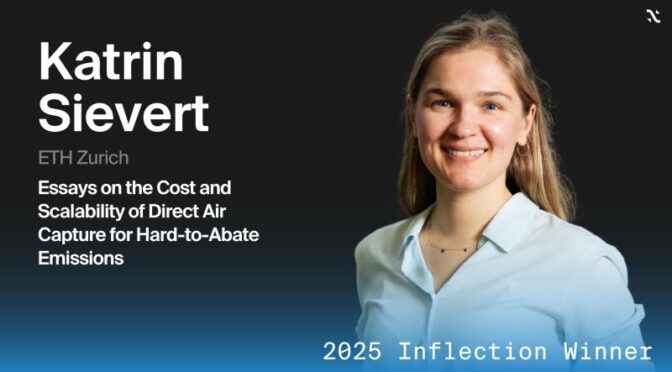
We are thrilled to congratulate Katrin Sievert on being selected as one of the top 30 young scientists addressing climate change and earning the prestigious Inflection PhD Award.
Plant breeding has been remarkably successful in developing high-yielding crop cultivars that have helped to sustain global food production over the last century. For instance, in the United States, the yield of the hybrid corn was increased 3 times, from 4 tons per hectare in the 1960s to 12 tons per hectare in 2017. By selecting and crossing plants with desirable traits, breeders have created crops that are more productive and adapted to intensive agriculture. However, this success has come with a trade-off: breeding has relied on genetic variation within a very limited primary gene pool, which has been shrinking due to genetic bottlenecks caused by domestication and intensive selection. As a result, today’s crops have lost much of their natural genetic diversity, making further improvement increasingly difficult.
Plant breeding has been remarkably successful in developing high-yielding crop cultivars that have helped to sustain global food production over the last century. For instance, in the United States, the yield of the hybrid corn was increased 3 times, from 4 tons per hectare in the 1960s to 12 tons per hectare in 2017. By selecting and crossing plants with desirable traits, breeders have created crops that are more productive and adapted to intensive agriculture. However, this success has come with a trade-off: breeding has relied on genetic variation within a very limited primary gene pool, which has been shrinking due to genetic bottlenecks caused by domestication and intensive selection. As a result, today’s crops have lost much of their natural genetic diversity, making further improvement increasingly difficult.
Most insects that interact with plants have preferences for certain chemical components in the material they consume. In the case of insect herbivores and pollinators, both groups often need specific nutrients, or the avoidance of compounds that are toxic for them. As a consequence, they have evolved preferences or aversions to specific plant compounds, which guide their foraging for food sources.
Most insects that interact with plants have preferences for certain chemical components in the material they consume. In the case of insect herbivores and pollinators, both groups often need specific nutrients, or the avoidance of compounds that are toxic for them. As a consequence, they have evolved preferences or aversions to specific plant compounds, which guide their foraging for food sources.
The unprecedented pace of technological progress is transforming our society, but is also driving an ever-growing demand for electrical energy. Meanwhile, The UN Sustainable Development Goal 7 pushes toward a future where everyone, everywhere, has access to clean, affordable, and reliable energy. This calls for cleaner production and conscious use of sustainable energy. Addressing this challenge of a sustainable energy transition is vital for the future of our society. A key factor in this regard is the efficiency of electrical networks. An efficient network, with minimal losses, enables innovations such as smart grids and the integration of renewable energy sources.
The unprecedented pace of technological progress is transforming our society, but is also driving an ever-growing demand for electrical energy. Meanwhile, The UN Sustainable Development Goal 7 pushes toward a future where everyone, everywhere, has access to clean, affordable, and reliable energy. This calls for cleaner production and conscious use of sustainable energy. Addressing this challenge of a sustainable energy transition is vital for the future of our society. A key factor in this regard is the efficiency of electrical networks. An efficient network, with minimal losses, enables innovations such as smart grids and the integration of renewable energy sources.