

If you are an early-career researcher with exciting new research with valuable insights for policymakers, then why not create a poster of your research and join the UN-ETH Forum? Over two days (20-21 October 2025), you will be able to present your research to national and international policymakers, practitioners, and other researchers.
Continue reading UN-ETH-Forum – Call for Contributions
ETH Policy Career Event
Are you interested in a policy related career? Join us and gain valuable insights into the professional world and career paths of various ETH alumni working across different policy domains and organizations at a national and international level! The event will feature a panel conversation and Q&A session with ETH alumni currently working in policy, followed by a networking apéro.
Continue reading ETH Policy Career Event
Interesting publication
Bridging the divide: Why the science-policy interface matters for global food systems
by Ismahane Elouafi
Continue reading Interesting publicationBridging Science and Policy – Two systematized overviews on training opportunities and science-policy interaction formats
A new report titled “On Science for Policy and Diplomacy Education in Switzerland and Beyond: A Brief Overview“ has just been released, offering timely insights into the growing field at the intersection of science, policy, and diplomacy. Published by the Swiss Young Network for Science Policy and Diplomacy (SYNESPOD) of the Swiss Young Academy, in collaboration with the Geneva Science-Policy Interface (GSPI) and the Franxini Project of Reatch, the report maps educational opportunities for early-career researchers and professionals in Switzerland, Europe, and globally.
Continue reading Bridging Science and Policy – Two systematized overviews on training opportunities and science-policy interaction formats
Science and Policy Summer School – Beyond the Lab
The 5-day summer school From Science to Action (2 ECTS) on Science and Policy aims to encourage early-career scientists to drive sustainable change.
Continue reading Science and Policy Summer School – Beyond the Lab
What to consider when buying a photovoltaics system for your home
Response Doctoral Program
With the Swiss energy transition underway, homeowners might consider investing in a photovoltaics (PV) system. However, the optimal PV system design depends on the homeowner’s preferences.
Continue reading What to consider when buying a photovoltaics system for your home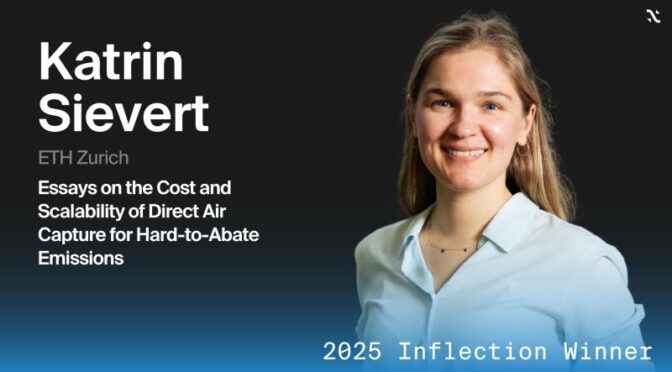
Celebrating Innovation: Recognizing One of the Top 30 Young Scientists Tackling Climate Solutions
Response Doctoral Program
We are thrilled to congratulate Katrin Sievert on being selected as one of the top 30 young scientists addressing climate change and earning the prestigious Inflection PhD Award.
Continue reading Celebrating Innovation: Recognizing One of the Top 30 Young Scientists Tackling Climate Solutions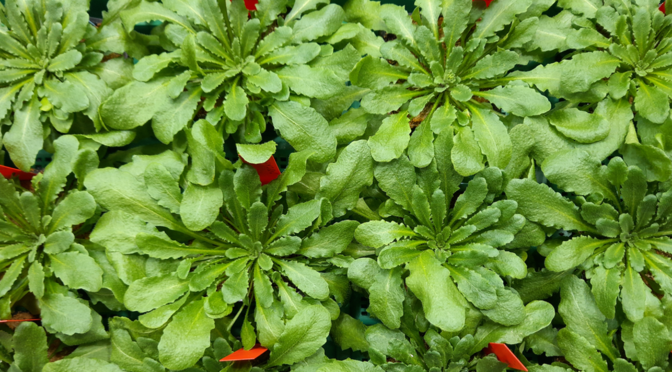
Epigenetics and Plant Breeding: Can Epigenetic Variation be used for Crop Improvement?
Response Doctoral Program
Plant breeding has been remarkably successful in developing high-yielding crop cultivars that have helped to sustain global food production over the last century. For instance, in the United States, the yield of the hybrid corn was increased 3 times, from 4 tons per hectare in the 1960s to 12 tons per hectare in 2017. By selecting and crossing plants with desirable traits, breeders have created crops that are more productive and adapted to intensive agriculture. However, this success has come with a trade-off: breeding has relied on genetic variation within a very limited primary gene pool, which has been shrinking due to genetic bottlenecks caused by domestication and intensive selection. As a result, today’s crops have lost much of their natural genetic diversity, making further improvement increasingly difficult.
Continue reading Epigenetics and Plant Breeding: Can Epigenetic Variation be used for Crop Improvement?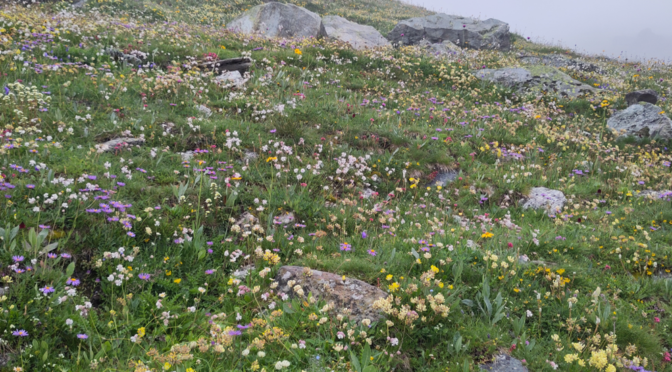
How Alpine Plants use Chemicals for Communication and Why this can be relevant for Conservation
Response Doctoral Program
Most insects that interact with plants have preferences for certain chemical components in the material they consume. In the case of insect herbivores and pollinators, both groups often need specific nutrients, or the avoidance of compounds that are toxic for them. As a consequence, they have evolved preferences or aversions to specific plant compounds, which guide their foraging for food sources.
Continue reading How Alpine Plants use Chemicals for Communication and Why this can be relevant for Conservation
Science and Policy Talk: Bridging Science and Policy to achieve Earth Trusteeship
On April 3, 2025, Neshan Gunasekera (Chief Executive Officer and Councilor of the World Future Council) will share his experiences on how you can prepare for a career at the interface between science and policy.
Continue reading Science and Policy Talk: Bridging Science and Policy to achieve Earth Trusteeship