Courtesy of the divisor function, here is another fun example of reasoning in the great style of Euler (the last installment is rather old…) A classical tool to study the distribution of values of  (the number of positive divisors of
  ) is the Voronoi summation formula, which expresses a sum

for a nice test function  , some positive integer
  , and some integer
  coprime to
  , in terms of a “dual sum”

where  is the inverse of modulo , and

is some integral transform of , with kernel  involving the classical Bessel functions
  and
and  . Precisely, we have

and one should add that there is also a main term in the Voronoi formula, but it is irrelevant for today's story. A classical application of this formula is to improve the error term in Dirichlet's asymptotic evaluation of

which was done indeed by Voronoi.
In an ongoing work with É. Fouvry, S. Ganguly and Ph. Michel, we needed to know some unitarity property of the transformation

This is an entirely classical question, but we didn't find a ready-made statement in Watson’s book on Bessel functions. There is however a formal argument that suggests the answer: if we consider the function  of two real variables defined by

then it turns out that we have

where  is the standard Fourier transform of
  (this is contained in Section 4.5 of the book of H. Iwaniec and myself.) Hence we have, by the unitarity of the Fourier transform, the identity

Offhandedly, by changing variables, this means that

which would give

(the factor  comes from the fact that is extended to an even function on
  from its original source as a function defined for non-negative real numbers), if not for the fact that the “constant”
  is the integral

Alas, it diverges, although probably Euler would write it as  (two infinities from the divergence at
  , the other two from the divergence at
  ), and be happy with the outcome.
One can then prove rigorously the formula  by truncation arguments, but here is a more conceptual argument (which offers the advantage of being something we can just quote), which follows from the interpretation of the Voronoi formula in terms of the representation theory of
  . What happens is that there exists a unitary representation
  of
of  (the principal series with Casimir eigenvalue
  ) which can be represented as acting on the Hilbert space
  (the Kirilov model) in such a way that the unitary operator
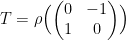
is given by an integral operator

for some function  , which Cogdell and Piatetski-Shapiro called the Bessel function of (see this note of Cogdell for a short explanation of this, with the analogues for finite fields and
  -adic fields). Now, by direct inspection of the formula for
  that Cogdell and Piatetski-Shapiro computed, and comparison with the kernel in the Voronoi formula, one finds that

(in this other short note, Cogdell explains why it is no coincidence that this abstract Bessel function appears in the Voronoi summation formula). Now, from

which holds for all  because
  is unitary on
  , we deduce exactly …
Remark. There is a completely similar story where the circles  replace the hyperbolas
  , or in other words, if one defines

Then the Fourier transform of is still a radial function  , and the map
  is a Hankel transform (it involves the Bessel function
  ). Its unitarity follows then immediately from that of the Fourier transform, since the analogue of the divergent integral is now, indeed, a finite constant.
In terms of representation-theory, the story is the same as above, except that the representation is replaced with a discrete series representation. One can also deal similarly with radial functions in higher-dimensional euclidean spaces, which involves other discrete series representations.